

Clay uses case studies 6 places on their home page alone.
Six. In writing it feels way too much. Six places?
But it really, really works. And elevates everything else they highlight.
I’m gonna take you through all of them, before we dive into tactics, here’s why they are doing it:
Case studies leads to more business
A case study is a piece of content that tells the story of how a customer used the product and what results they got out of it.
Here is one of Clay’s Case Studies
And we use them because buyers look for them and think they are helpful.
Here are the studies on Case Studies in B2B.
84% of B2B companies think they are clear on problem vs solution. Only 36% of buyers agree (source)
90% of B2B buyers trust peers in their industry, whereas only 29% trust vendor sales reps (source)
42% of B2B buyers said case studies and success stories are the most influential type of content (source)
55% of buyers find case studies and product reviews helpful or appealing (only surpassed by short form video content) (source)
72% of all B2B companies use case studies which makes it the most used marketing tactic (source)
Enough numbers for now.
I will dive into the depth of why you should drive more traffic to your case studies at the end.
Let’s look at the Clay Case Study Playbook.
The 6 case study tactics from Clay’s home page.
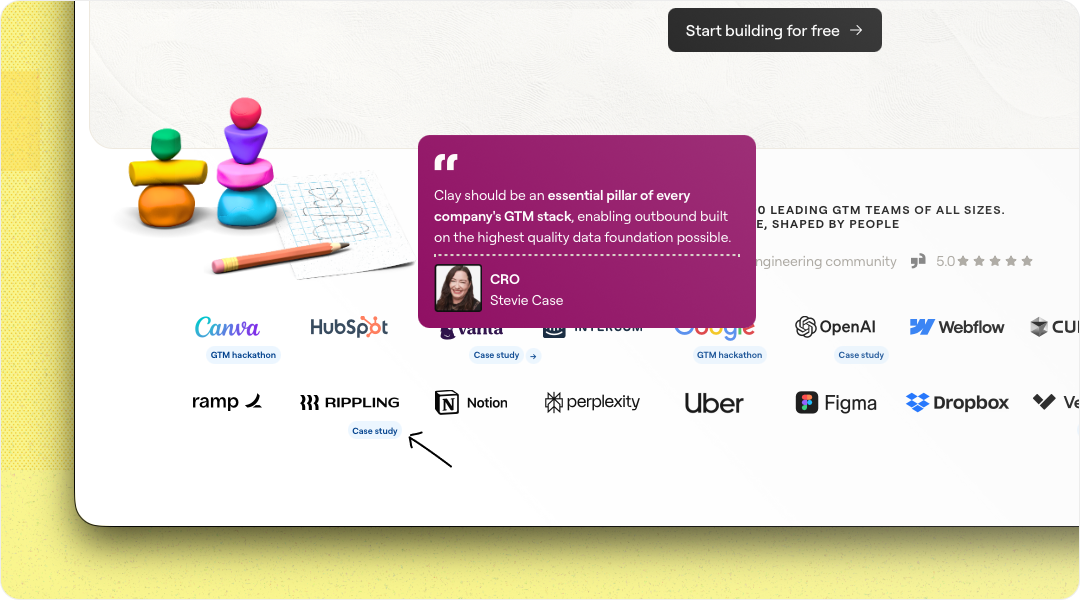
Logo wall with case studies
Most companies have a logo wall, but Clay is using theirs very clever. They have a small label under some of the logos that says Case Study. When you drag your mouse to it, you get a quote from a customer and it creates instant credibility.
We grow blind to logo walls over time, but this creates a deeper layer that really makes it interesting. But you have to make it obvious. Take a look at Wiz and their logo wall. They also use this tactic, but theirs are too hidden with that little plus and it makes it less useful.
Doing this allows you to pack more value into your hero and hopefully your buyers will notice. It’s worth the test.
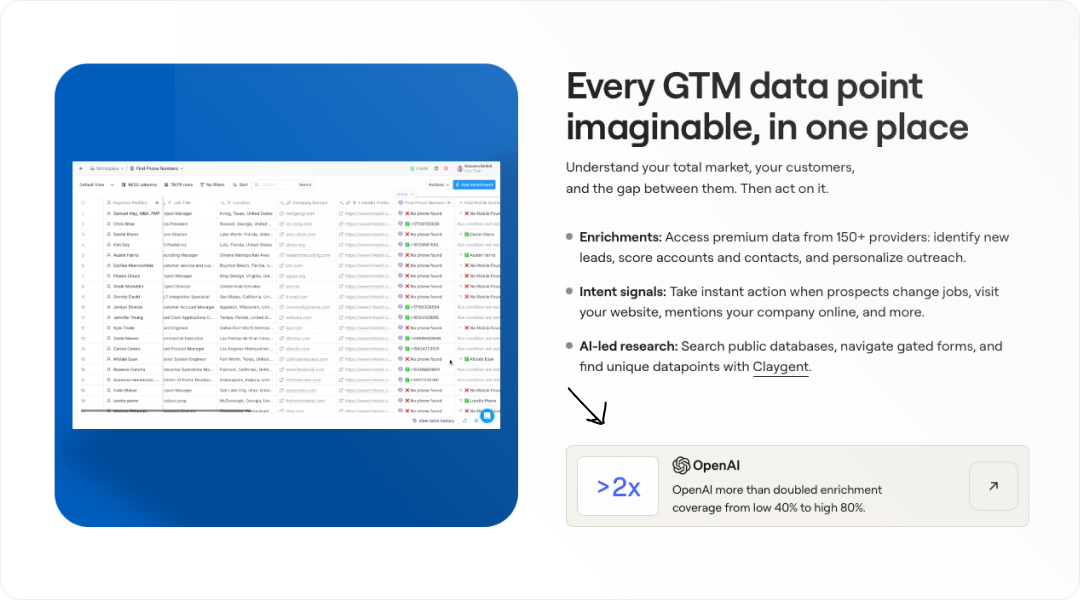
Capability section
For each of their capability sections, they have attached another case story with an direct outcome. Again, this builds credibility.
This works really well if you have a number or result that links directly to the capability you are describing.
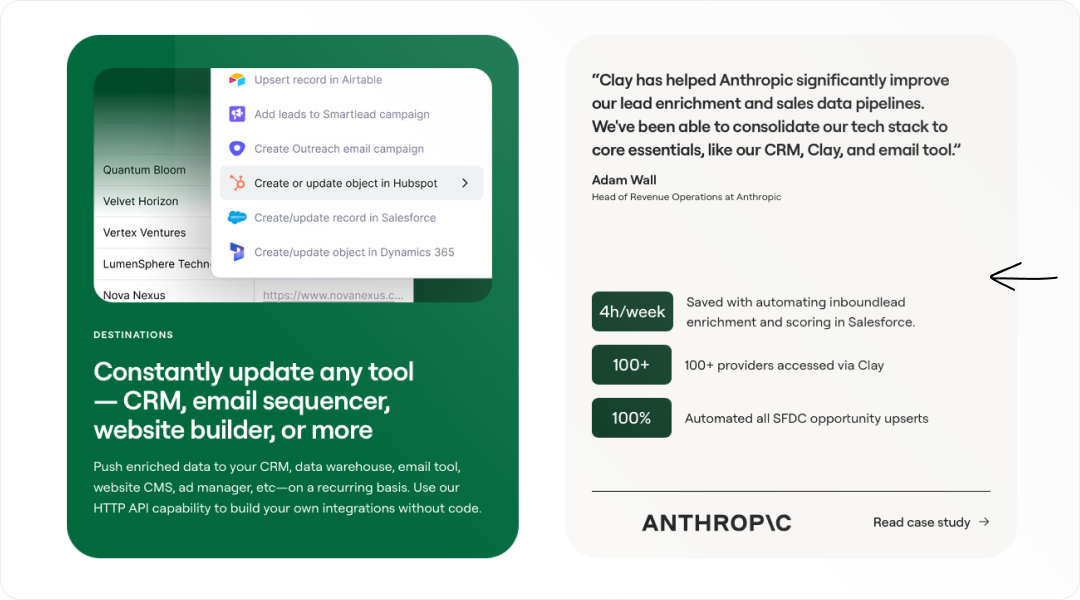
Feature section
The feature section has a different design than the capability section and that makes you stop at it, recognising it as a new section.
Following that change in design is the customer case. Here we get even more context with a quote, multiple results, logo and name.
And they struck a good balance in the visual hierarchy on how they put focus on the results rather than the name.
Again, use a contextual Case study if you have one.
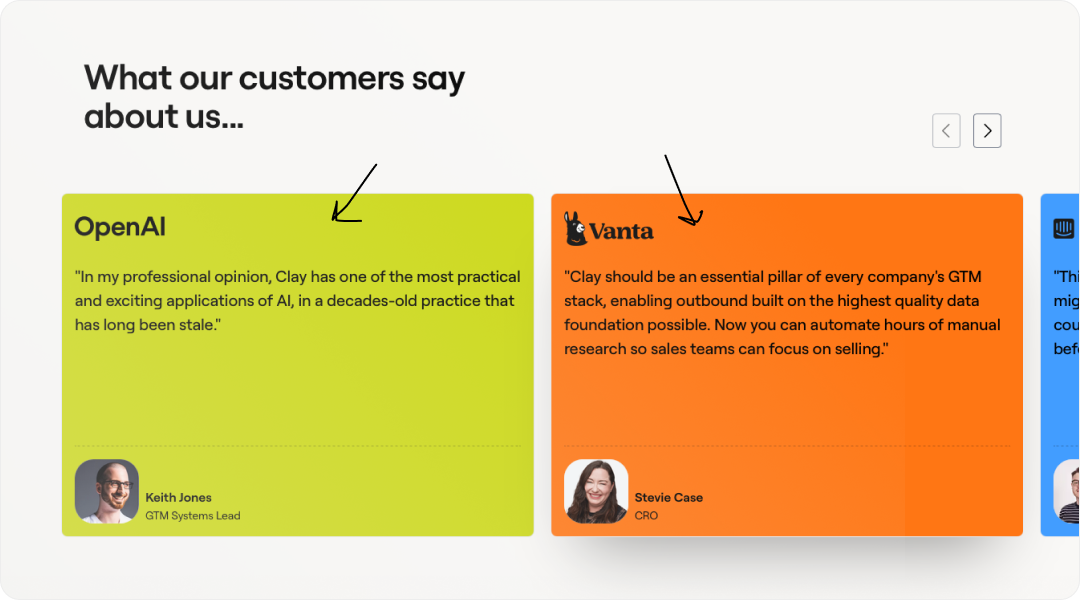
Customer quote section
Big attention-grabbing cards with logos, real images of people, titles and a quote about how great Clay is.
This is the classic.
It’s lower down on the page because they want you to read about the product and problem they solve first and then introduce the evidence of their claims.
Their design on these are also great because of the big contrast.
Footer
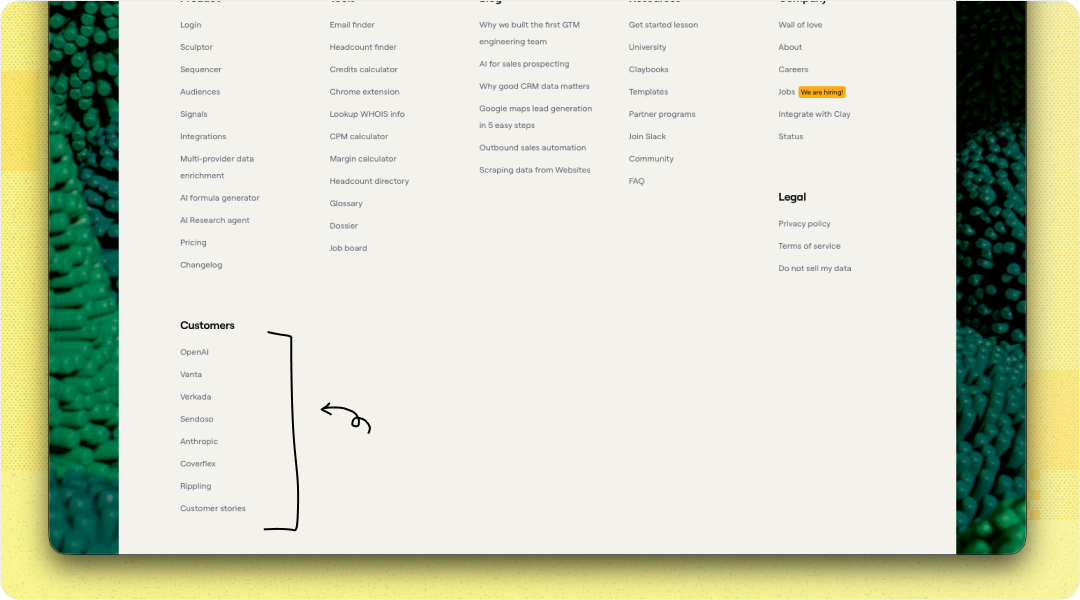
Case studies have their own table in the footer where they highlighted some of the big brands they work with and then have a link to the rest of the stories.
This again makes it very easy to access customer stories and establishes trust from the big brands.
There is also another hidden effect from this: It makes it super easy for the LLMs to find who the customers are and highlight them in AI searches buyers do. Casey Hill wrote about that right here.
I do not like the design, but I think it’s something they have tested for attention, knowing the value of getting your buyers to read these.
In the solutions menu
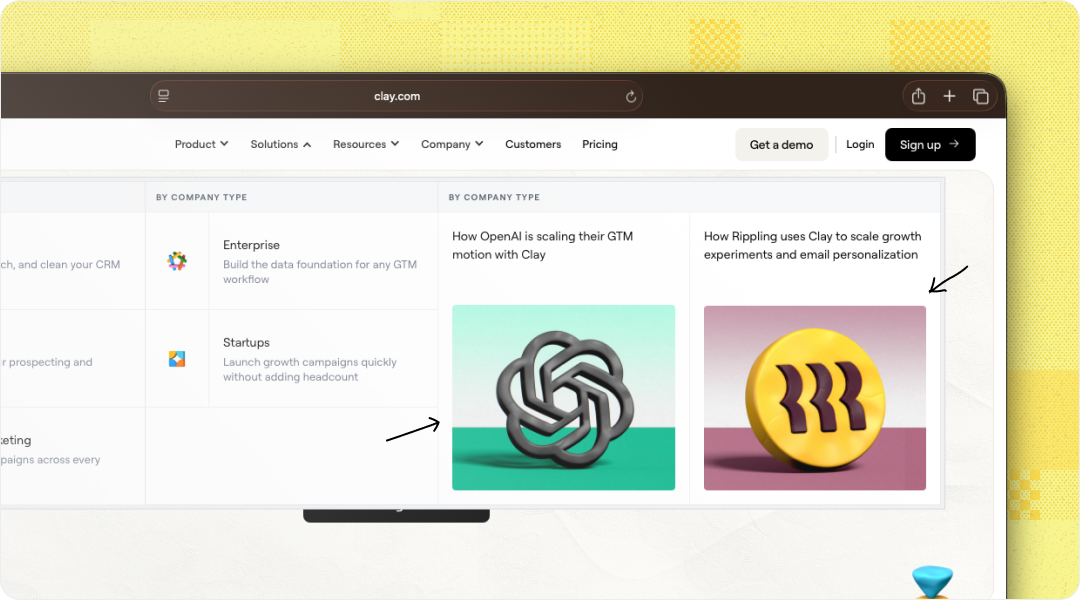
They have two massive cases in the hover-state menu under solutions.
This again makes it very easy to find and read customer stories and again with a different design than all the others. Here with their own clay illustrations, which brings the customer very close to the brand.
Smart move - and highlighting content in our menus is a way underused great tactic
The buyer-fit problem solved
One problem Clay is solving perfectly here is the buyer-fit problem. Buyers look for companies like themselves and trust those sources more. You have to get different Case Stories in front of your audience on the website so there is a higher likelihood of them finding something that is a fit for them.
Go to Clay.com and check them all out for yourself. They deserve to be looked at in context of everything else going on at the Clay website.
Why should you drive more traffic to your case studies
To support your claims.
Everything you say will feel more convincing when you have a customer next to you acting like your hype-man. Underlining that the capabilities and results you promised is 100% what they experienced.
To win over the buying committee
Case studies are mostly a late-stage asset used for the final push to pick a vendor. In most B2B buying processes there are 6-10 people involved. Here it can become a strong asset of convincing internal stakeholders like finance or IT about the value and create internal buy-in.
To make an easy alternative for peer reviews
Case studies also solve for a different problem. Talking to a user or a peer about your product is the number one trusted source. But at the same time 41% of all B2B buyers wished it was easier to find another user to talk in their research (source). So the case study becomes a nice replacement.
To make an alternative to ROI assessment
And in the same line: 31% of buyers wished they could change this about the buying process: “I wish calculating ROI were easier so I could get the budget approved” (source). You should have clear ROI calculations available, but if you don’t case studies are a second best source.
To drive more LLM traffic
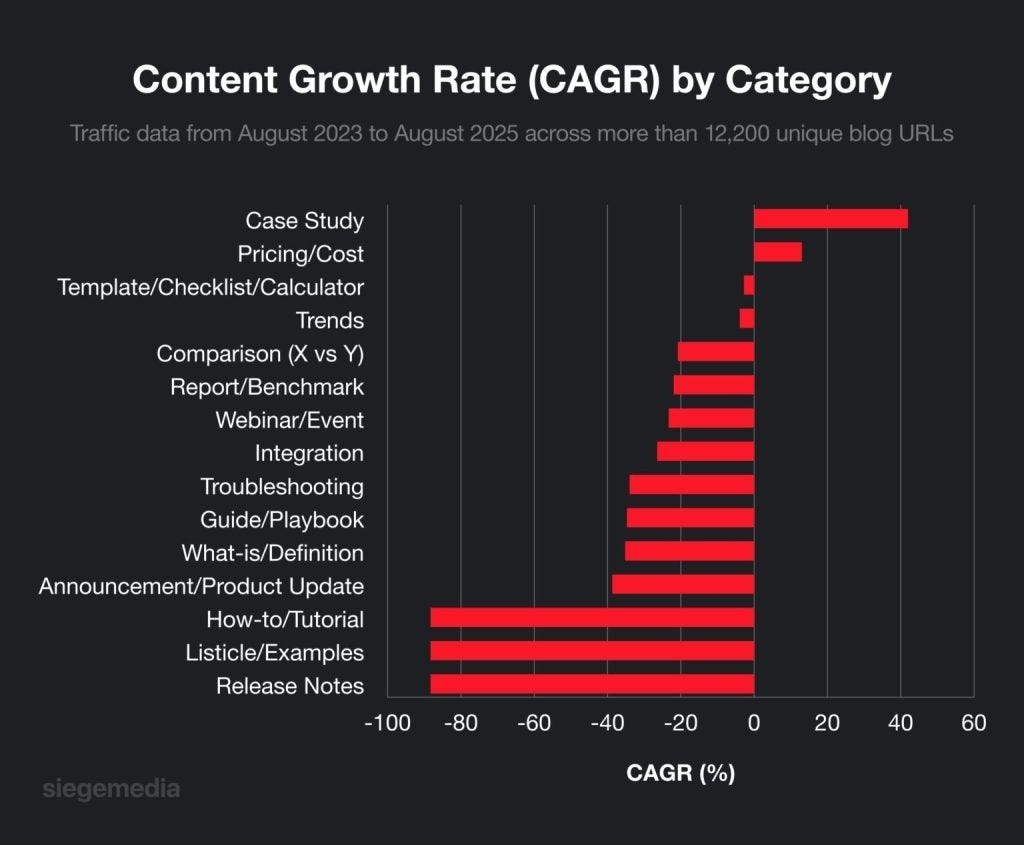
Case studies are the best content type to drive traffic in the age of AI (source). By a large margin. The more you make internal linking to them, the more visible they become for search engines.
But the most important strategic reason to drive more traffic to your case studies:
Answering more of your buyers questions.
You have to make it easy to buy from you. You do that by answering your customers questions with the depth and quality that makes them see you as a trusted source.
Case studies are built for that.
And by having them, you answer up to 20% of the non-negotiable buyer questions in the “Buyer Question Stack (I’m still working on the name, relax).
These are critical to win buyer trust and lowers friction for the buyers as they consider your as the solution to their problem.
Who do you solve the problem for? (non-negotiable)
What results do customers get? (non-negotiable)
What ROI have customers seen? (non-negotiable)
What metrics does this improve? (non-negotiable)
Case studies answer them all. And if you highlight them like Clay does, you’ll get the full benefit if the hard work case studies requires.
If you only take one thing away from this read, let it be this.
Don’t rely on buyers doing the heavy lifting and let them look for answers to their questions. Place your most valuable assets in front of them just like Clay does.
If you have less than 6, you now know where to start.
Ps.
At Lowfriction, I’m building a library of all the questions buyers ask in the buyer journey, from problem understanding to onboarding with a vendor.
For each question I’m filling them with ways you can answer them elegantly, like this story from Clay. And writing advice on how to implement them.
I would love some feedback on the thing, so if you would like a peek, write me back and let me know.